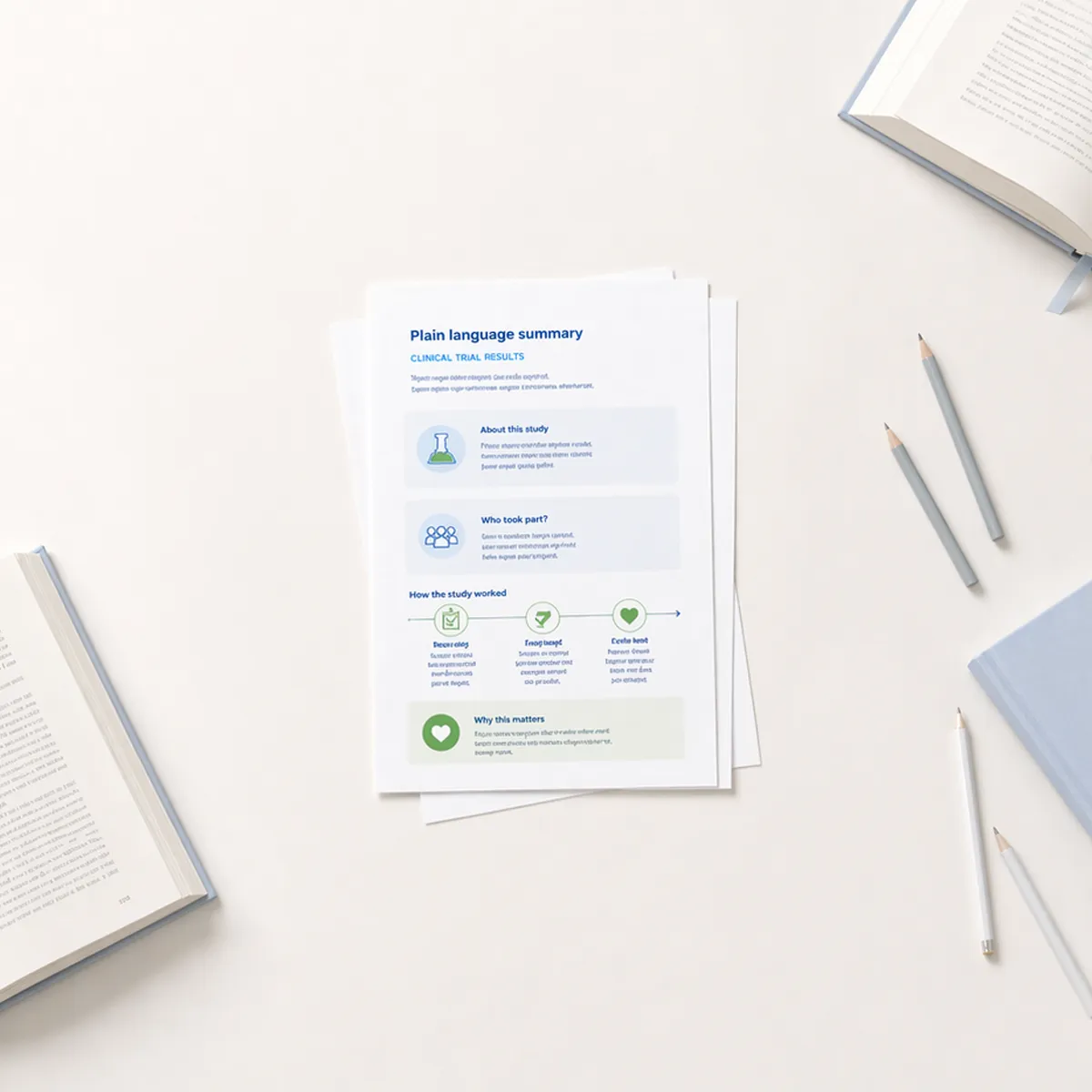
A document can be clear and well designed, and still be hard to use.
That does not mean the material failed. It means understanding does not happen in a vacuum.
Health information is often read in the middle of stress, pain, fatigue, worry, or distraction. A person may understand the words on the page and still not know what to do next.
That is why clear materials still need a guide.
Why clarity alone is not enough
Plain language matters. Good design matters too. Both reduce effort and make information easier to use. But even the clearest handout cannot carry the full weight of communication on its own.
Understanding is not only about what a person can read. It is also about what they can do with what they read.
Sometimes people still need someone to walk them through it. They may need help seeing what matters most, what step comes first, and how to use the information once they are on their own.
When more support is needed
This is especially important for people with low literacy, but it is not limited to them. Many people need more support when information is new, stressful, technical, or tied to an important health decision.
A well-designed document can reduce barriers, but it may still not be enough without explanation or support. That is one reason teach-back matters so much. It helps confirm whether the message was understood, instead of assuming that handing over the material was enough.
What I saw in practice
I saw this clearly when I tested symptom trackers with low literacy individuals.
The trackers were simple by design. But even then, I found I needed to explain how they worked. I used myself as an example, then asked them to try one with me so I could make sure they understood what they were being asked to do and how to use the tracker on their own.
That stayed with me. It was a reminder that making a tool simple is essential, but a quick example, a short explanation, or a chance to try it can make all the difference.
What helps in real life
That is where teach-back, demonstration, and practice come in.
Teach-back helps confirm whether the message actually landed. Instead of asking, “Do you understand?”, it asks the person to explain the information back in their own words.
Demonstration helps when something is easier to show than describe.
Practice gives people a chance to try it while support is still available.
Together, these can make the difference between receiving information and being able to use it.
The bottom line
Clear materials are essential, but they are not always enough on their own. A handout, tracker, summary, or instruction sheet can do a lot, but sometimes its real job is to support a conversation, not replace one.
In real health situations, understanding often depends on explanation, demonstration, and support. Good design can make that easier, but it cannot be expected to do it all alone.