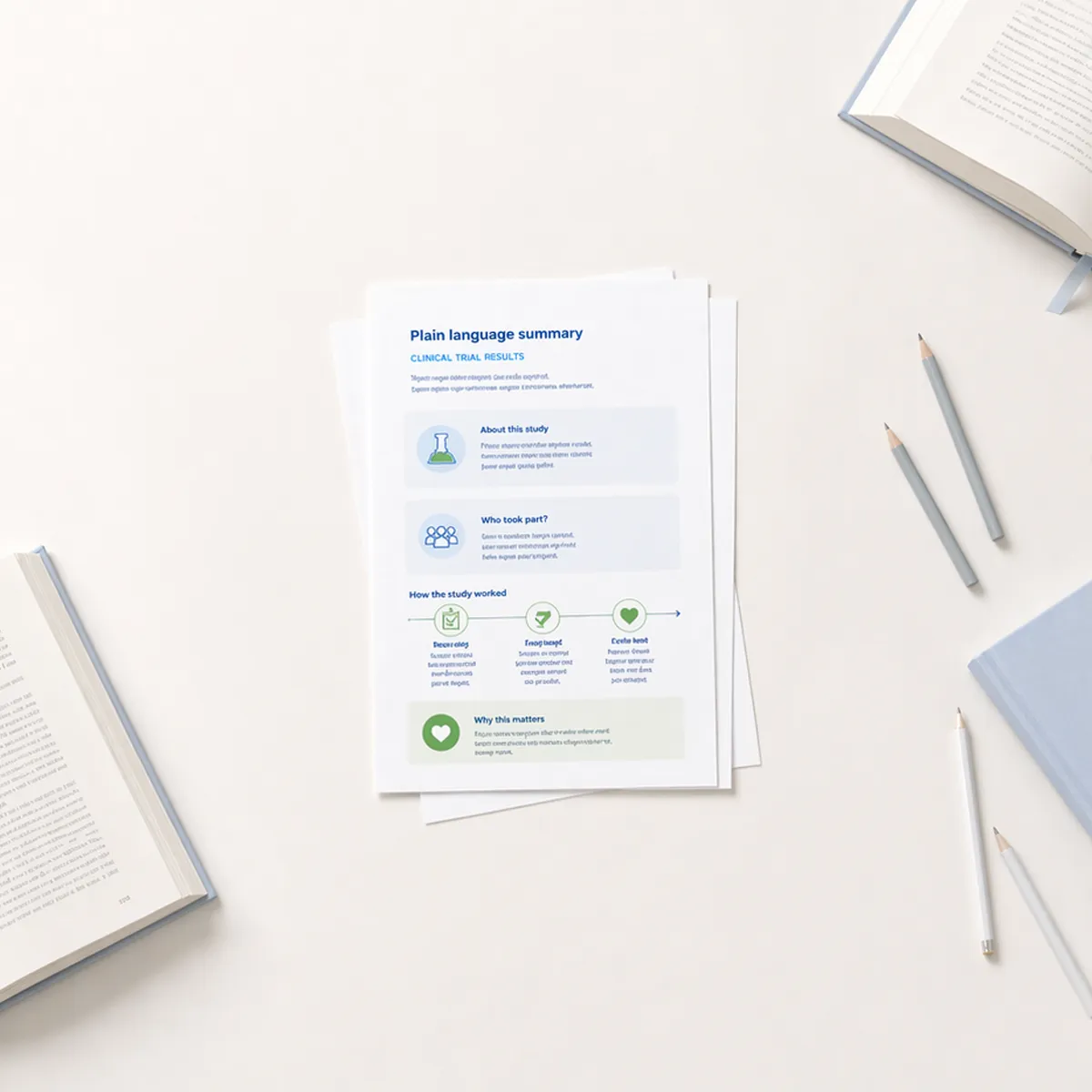
Plain language summaries (PLSs) of clinical trial results are developed to make complex research information understandable to people without a scientific or medical background. Considerable effort goes into the language, structure, and visual presentation of these documents to make the information accessible and clear.
But when we talk about making clinical research accessible, are we considering the different ways people access that information?
What do we mean by accessible?
In health literacy, accessibility is often understood as making health information easier for people to find and understand. Plain language plays an important role in making that possible.
Digital accessibility extends that consideration to how people with disabilities access, navigate, and use information through assistive technology.
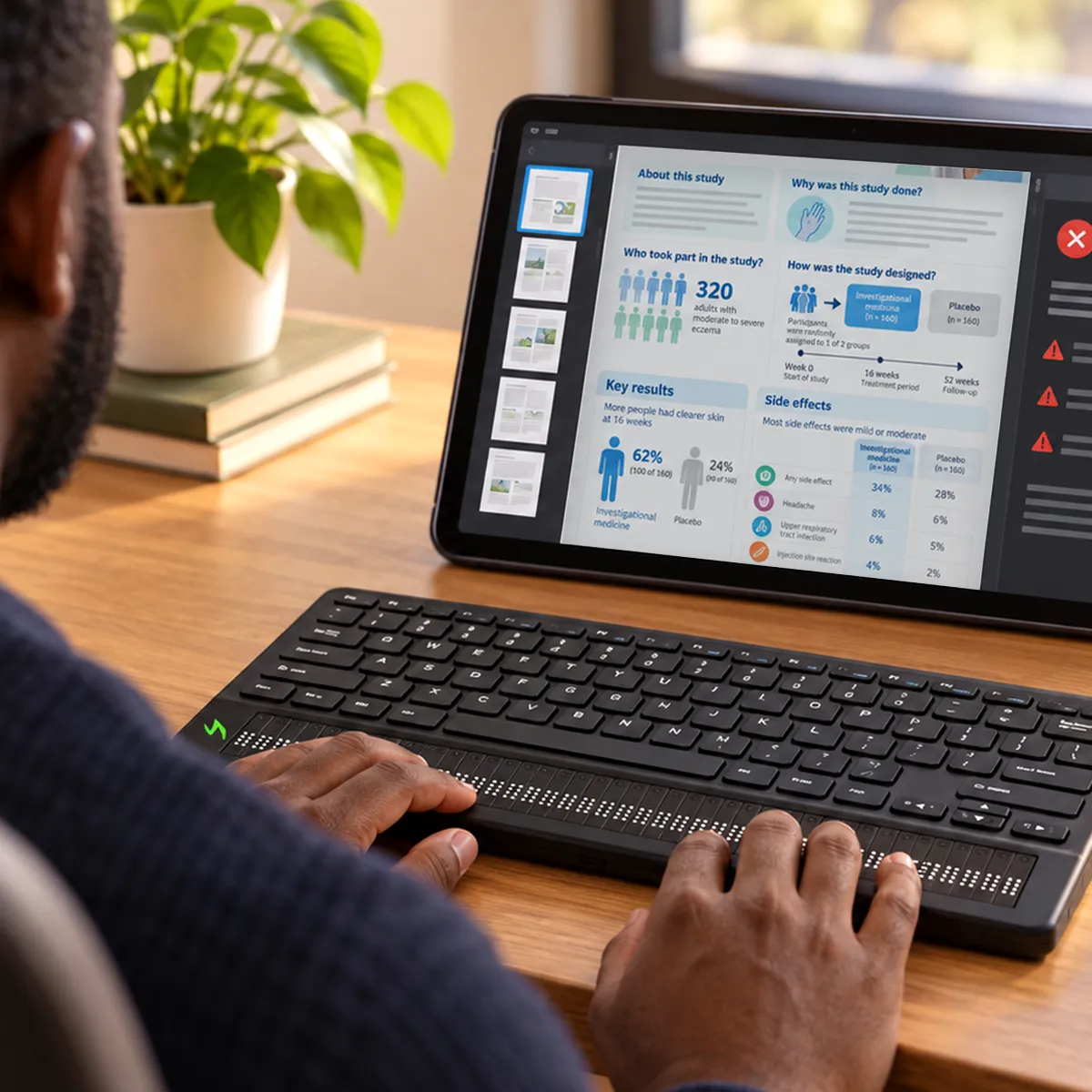
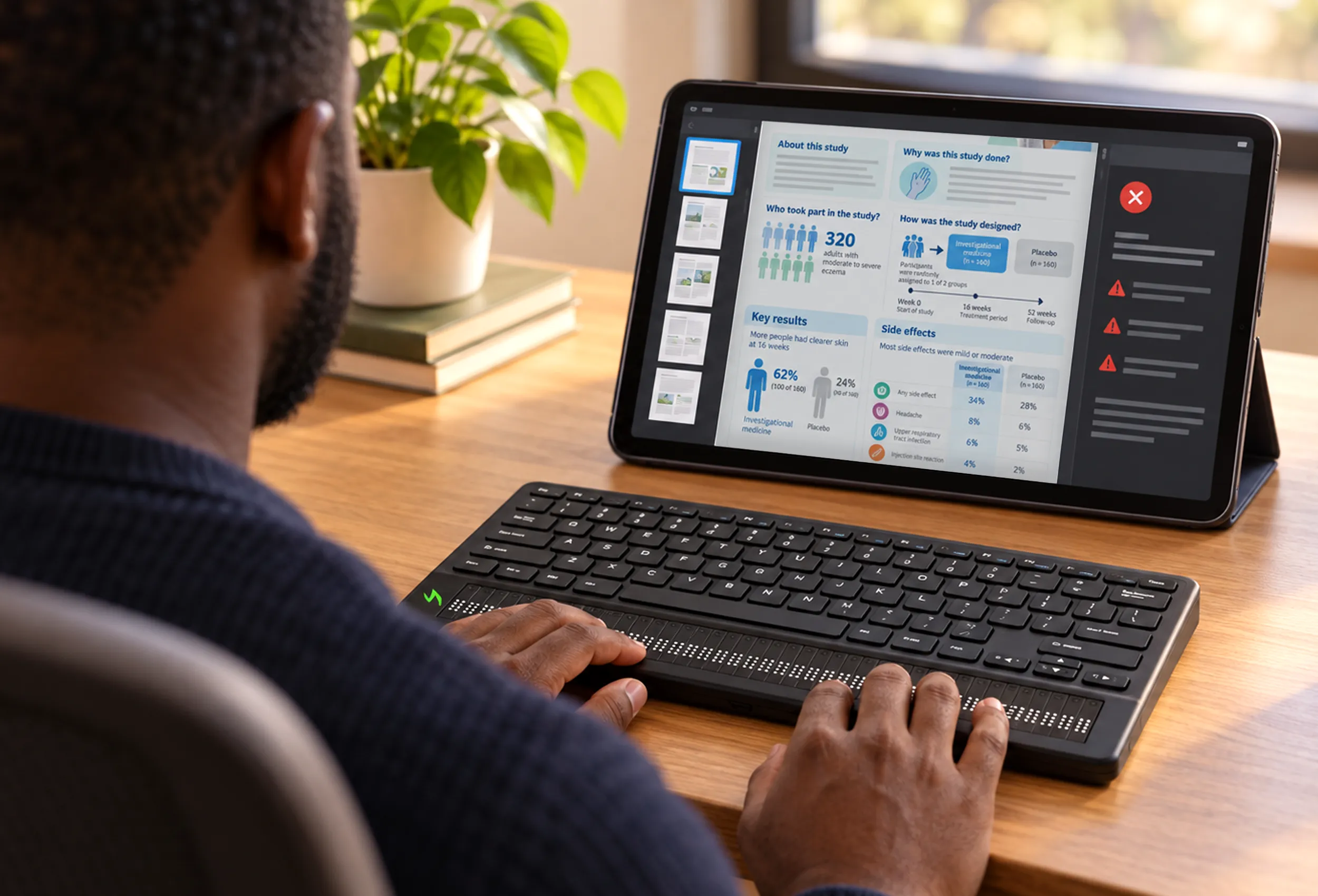
A PLS may use clear language and follow good design practices, yet still present significant barriers for people who rely on assistive technology to navigate the document.
When a clear visual becomes difficult to understand
Consider a study design graphic showing the different groups of participants and the study timeline, from screening to follow-up.
Visually, illustrations and groupings may make the study easy to follow. But for someone using a screen reader, the experience depends on how the document is structured and tagged for accessibility. Does the sequence still make sense? Can the reader understand the different treatment groups and stages of the study?
Side effects tables present another challenge. A table may appear straightforward with side effects and percentages neatly arranged in rows and columns. But navigating that same information with assistive technology can be challenging, particularly when the relationships between headings and data are complex.
These are examples of why accessibility needs to consider the reader's experience. The information must remain meaningful regardless of how someone accesses it.
Why might digital accessibility be overlooked?
Teams developing plain language summaries already work through complex processes involving scientific accuracy, plain language, review, and approval. Digital accessibility may not be explicitly included in those processes, or responsibility for it may be unclear.
There may also be a gap in how accessibility is understood. When the focus is on making research easier to understand through clear language and visual design, the needs of people using assistive technology may be overlooked.
Other factors may include limited awareness of digital accessibility, uncertainty about the expertise required, or concerns about the time and cost involved.
Without asking the people involved, we cannot know which of these factors applies to a particular organization.
Accessibility begins before the final PDF
One practical way to address this is to consider digital accessibility throughout the PLS development process, from writing and design to final review.
Decisions about document structure, visual presentation, and accessibility features can influence how effectively people with disabilities access and navigate a PLS. This is especially relevant to the more complex elements commonly found in clinical trial summaries, such as study design graphics.
Building accessibility into the workflow can reduce the need for corrections later. Testing the final document with assistive technology is also essential for evaluating accessibility and the user experience, helping ensure that people can meaningfully navigate and interpret the information.
Making room for digital accessibility
The effort that goes into making clinical trial results understandable reflects an important commitment to the people who participate in research and the wider public.
Extending that commitment to digital accessibility means considering how people with disabilities will navigate, experience, and understand those results.
For sponsors and teams developing plain language summaries, this begins with including digital accessibility in their workflow, rather than treating it as something to address right before publication.
If the purpose of a plain language summary is to help people understand clinical trial results, shouldn't everyone have a meaningful opportunity to access that information?